Key takeaways:
- The 2026 Section 179 deduction limit increases to $2,560,000 for qualifying equipment placed in service during the tax year.
- The deduction begins phasing out after a business place more than $4,090,000 in qualifying property into service.
- 100% bonus depreciation remains available in 2026 for eligible equipment acquired after January 19, 2025.
- Equipment must be placed into service by December 31, 2026, making early planning essential for custom-built systems.
How Manufacturers Can Benefit from Tax Deductions to Invest in Welding Automation
Every year, manufacturers face pressure to increase production, reduce labor costs, improve weld consistency and meet tighter deadlines. Automation equipment may offer relief, and the 2026 Section 179 tax deduction could make this investment even more cost-effective.
What Is a Section 179 Tax Deduction?
Section 179 is a federal tax deduction allowing eligible businesses to deduct the purchase price of qualifying equipment as soon as it enters service, rather than having to recover its cost through depreciation deductions over multiple years.
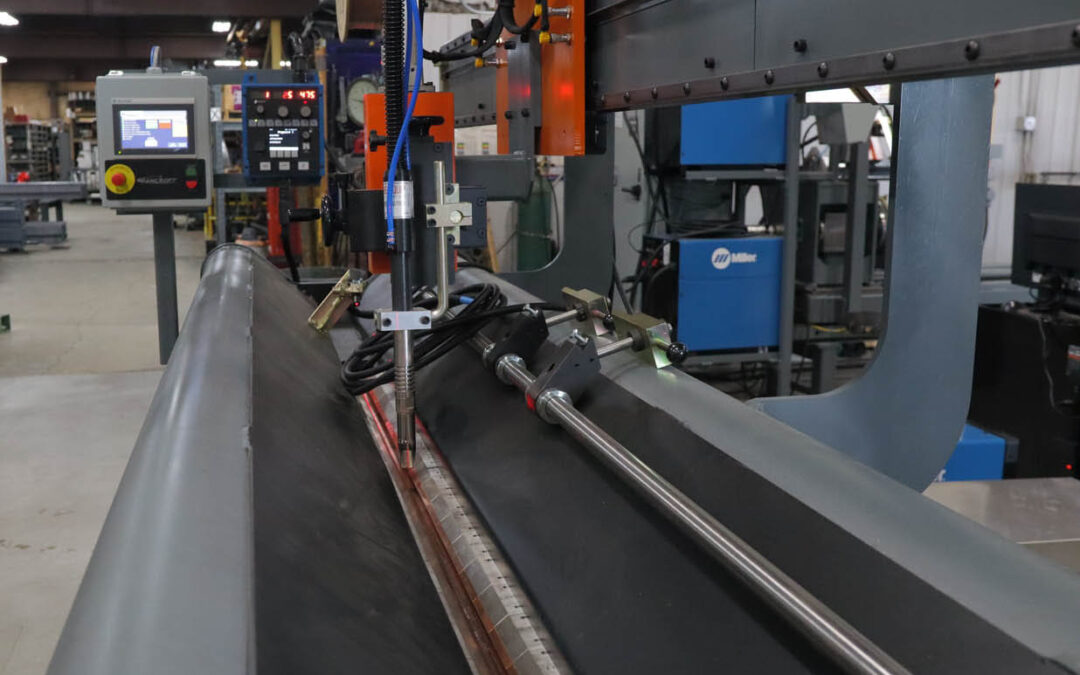
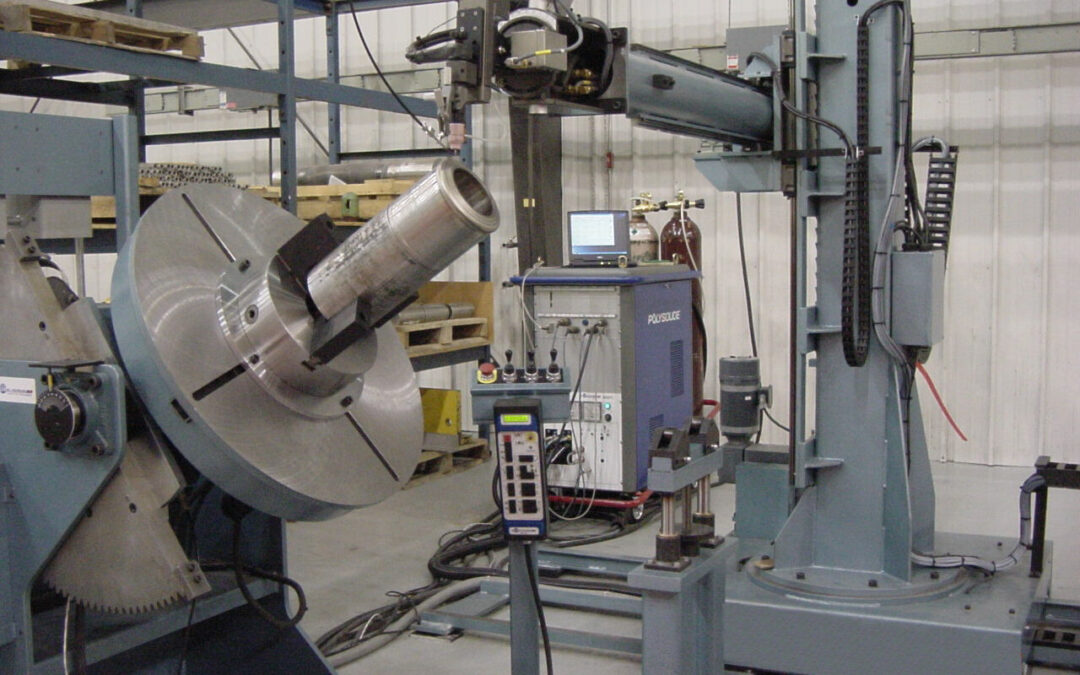
Manufacturers may make eligible purchases of new or used automated welding machines, robotic cells, positioners, weld lathes, seam welding/cladding equipment, material-handling equipment and other machinery and software.
You can then elect to deduct up to $2,560,000 of qualifying Section 179 property placed into service during the 2026 tax year.
Phaseout Threshold: $4,090,000
The Section 179 deduction starts to decrease once a business places more than $4,090,000 in qualifying property into service during any given year, making this section especially helpful for small and mid-sized manufacturers making targeted capital investments.
Current federal tax law also offers permanent 100% bonus depreciation on qualifying property acquired after January 19, 2025, giving additional savings when equipment investments exceed their available Section 179 deduction.

Section 179 Matters to Fabricators
An investment in welding systems can pay dividends in terms of throughput, repeatability, operator safety and long-term production capacity.
Section 179 can help manufacturers realize this value faster. Businesses may be eligible to deduct some or all the qualifying cost from their taxes in the year that a system goes into service, making it easier to justify projects that:
- Replace an outdated manual welding process
- Increase production capacity
- Improve repeatability and reduce rework
- Automate repetitive welds
- Bring an outsourced process in-house
A Section 179 Savings Example for 2026

Consider a manufacturer who invests and places a $275,000 automated welding system into service during 2026: With respect to tax deductions alone, an approximate deduction would be $275,000. Assuming combined tax rates of 35%, estimated reduction of $96,250 can be expected; after-tax cost estimate stands at approximately $178,750
In this scenario, the manufacturer could potentially reduce its tax liability by approximately $96,250 using Section 179 deductions (not rebates or price reductions) depending on their tax rate, income eligibility criteria and other circumstances.
Equipment Must Be Installed into Service during 2026
Ordering equipment prior to year-end alone will not qualify you; rather, it must be installed, operational, and ready for its intended use by December 31st, 2026 for eligibility.
It’s important to start early when planning a custom welding system purchase as application reviews, engineering design, manufacturing, testing, delivery and installation can take time. Contact Bancroft now to get started.
Plan Your Welding Equipment Investment for 2026 Early
With increased Section 179 limits and 100% bonus depreciation available, 2026 could prove an excellent year to invest in manufacturing equipment. By planning ahead, your team can select an optimal system and complete engineering, testing, delivery and installation before year end!
Bancroft Engineering designs and manufactures standard and custom welding systems, such as:
- Robotic welding systems
- Seam welding equipment
- Weld Lathes
- Automated welding positioners
- Custom systems
- Cladding equipment
- View all equipment here
Contact a sales engineer at Bancroft now for help planning your 2026 welding equipment investment.
Frequently Asked Questions: Section 179 in 2026
Q: Does Used Equipment Meet IRS Requirements?
A: Used equipment may qualify if it satisfies IRS standards; additional restrictions may apply if purchased through related parties or previously owned property.
Q: Can Financing Preclude Claiming Section 179 Deductions?
A: Financing doesn’t preclude businesses from claiming Section 179 deductions; equipment purchased with financing could still qualify for deduction based on its full purchase price.
Q: Can custom welding equipment qualify?
A: Yes, custom equipment may qualify just like standard equipment does, if it’s completed and put into service within its applicable tax year.
Q: Is Section 179 a tax credit?
A: No; rather it reduces taxable income which saves on taxes depending on each business’s applicable tax rate.
Q: What is the 2026 deadline?
A: Qualifying equipment must generally be purchased and installed into service by December 31, 2026 for calendar-year businesses to claim it for 2026.
Have more questions? Head to the official Section 179 website for more details.
Note: Bancroft Engineering does not offer tax or legal advice. Your eligibility and savings depend on various factors, so before making purchasing or tax-planning decisions consult a certified tax professional.